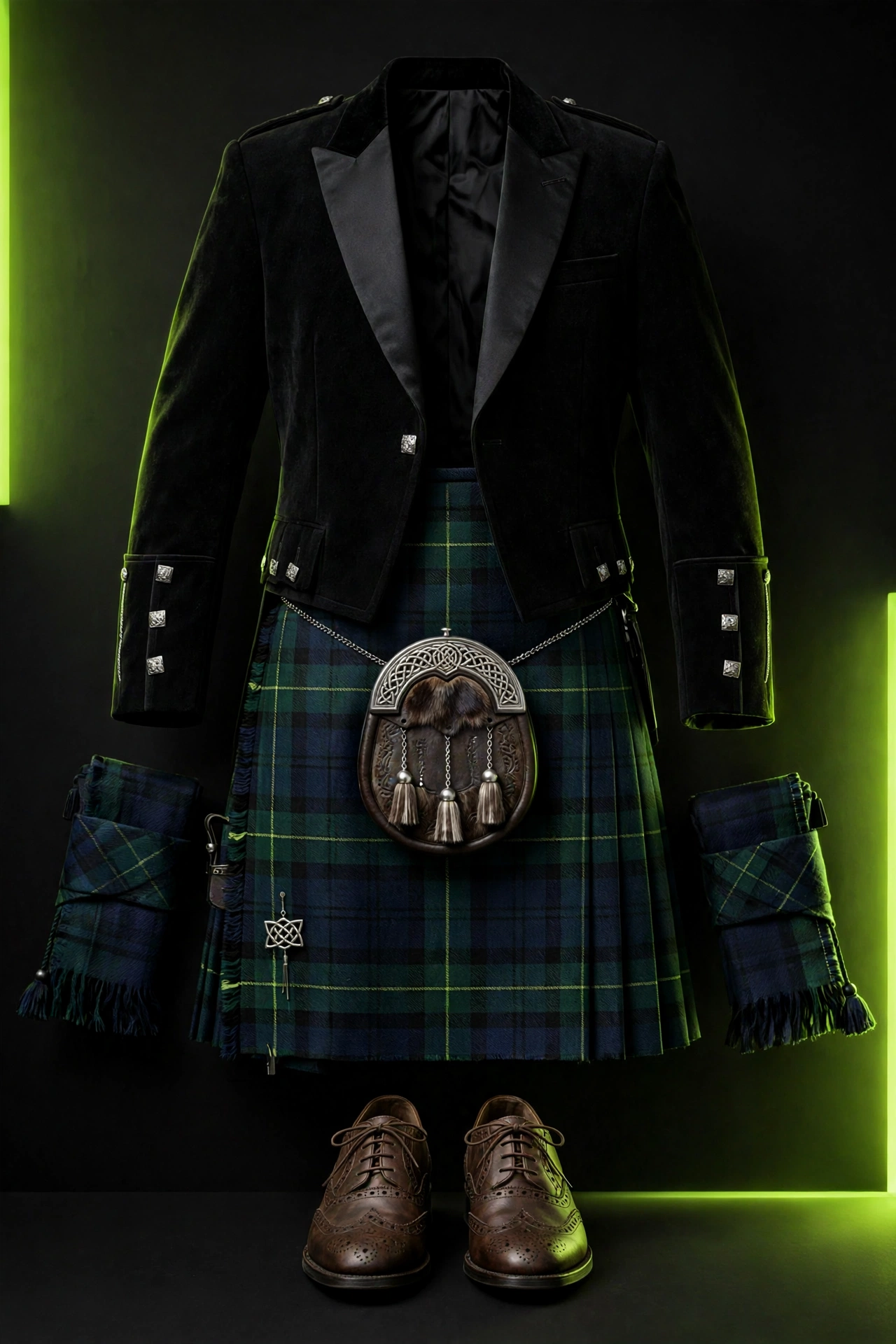
Scottish Outfits Wholesale — Kilts, Jackets, Sporrans and Full Highland Outfits in Bulk
Quick answer
Alisterz manufactures complete Scottish outfits in bulk from Sialkot, Pakistan, for retailers, heritage and clan shops, wedding and event outfitters, and pipe bands: tartan kilts, Prince Charlie and Argyll jackets, sporrans, waistcoats and the accessories that turn separate pieces into a full outfit a customer can walk out wearing. You buy the outfit as a set or build your stock piece by piece — either way, the tartan, sizing and finishing are set by you and confirmed on a physical sample before bulk production starts. The pre-production sample takes 5–7 days with a free sample available, bulk production runs 15–20 days, and we ship worldwide by DHL, FedEx or sea. Pricing is tiered — the per-piece cost falls as quantity rises — and the MOQ is confirmed for your exact styles in the quote.
The spec summary
| Outfit components | Tartan kilts, Prince Charlie jackets, Argyll jackets, waistcoats, sporrans, shirts, kilt hose and accessories |
| Kilt fabrics | Acrylic tartan or wool-blend tartan — your choice per price point |
| Tartans | Your chosen tartan, or custom tartan designs produced to your reference |
| Jackets | Prince Charlie (formal evening), Argyll (day and semi-formal) |
| Sporrans | Day sporrans and dress sporrans, matched to the outfit level |
| Sizing | Kilts by waist in inches; jackets by chest size — full runs for retail stock |
| Branding options | Your shop labels and packaging applied during production |
| Sample | 5–7 days; free sample available |
| Bulk production | 15–20 days after sample approval |
| MOQ | Per style — confirmed in your quote |
| Pricing | Tiered: unit price falls as quantity rises |
| Shipping | Worldwide — DHL/FedEx air or sea freight |
A Scottish outfit is a set, not a single garment
The buyers who struggle with this category are usually the ones who ordered “kilts” and then discovered their customers wanted the whole outfit. A kilt on a rail is half a sale. The customer hiring or buying for a wedding, a Burns supper or a clan gathering wants the jacket, the sporran, the hose and the right shirt in the same visit — so a serious Highland-wear stock is built as sets, in matching tartans and graded sizes, with each piece also saleable on its own.
| Component | What it is | Formal (Prince Charlie) outfit | Day / semi-formal (Argyll) outfit |
|---|---|---|---|
| Kilt | Pleated tartan kilt, traditionally made from around 8 yards of fabric | Yes | Yes |
| Jacket | Short Highland jacket worn open at the front | Prince Charlie coatee with tails | Argyll jacket with gauntlet cuffs |
| Waistcoat | Worn under the jacket | Usually, low-cut formal style | Optional, standard style |
| Sporran | Pouch worn at the front of the kilt | Dress sporran (fur front, ornate cantle) | Day sporran (plain leather) or semi-dress |
| Shirt | Dress shirt with bow tie, or standard shirt and tie | Bow tie, formal shirt | Standard tie or open-collar options |
| Hose & shoes | Kilt hose with flashes; brogues | Cream or dark hose, ghillie brogues | Kilt hose, standard brogues |
| Accessories | Kilt pin, belt and buckle, fly plaid, sgian-dubh | Full set | Partial set |
When you enquire, tell us which outfit level you are stocking — formal hire, retail sale, or band uniform — and the quote is built around complete sets in your size runs, not loose garments you then have to match yourself.
Kilts: acrylic tartan vs wool — the fabric decision that sets your price point
On the kilt itself, the honest fabric split is acrylic tartan versus wool and wool-blend tartan. Acrylic tartan holds its pleats, is lighter and cheaper, and is what most hire fleets and value retail ranges are built on — it takes the repeated wear and cleaning of a hire season. Wool and wool-blend tartan is heavier, drapes the way a traditional kilt should swing, and is what premium retail and made-to-measure customers expect. Neither is “fake”: they are two price points, and most outfitters stock both.
Pleating matters as much as cloth. A traditional kilt is pleated so the tartan pattern — the sett — repeats across the back, or pleated to the stripe for military and band styles. That is a construction decision made in production, and it is exactly what the sample stage is for: check the real tartan, in the real pleating, in hand, before a full size run is cut. If you are new to kilts as a standalone line, our kilts manufacturer guide covers kilt sizing and construction in more depth.
Jackets and sporrans: where outfits succeed or look wrong
The jacket decides the formality, and mixing levels is the most common stocking mistake. The Prince Charlie is the formal evening jacket — short coatee front, tails at the back, worn with a bow tie and a dress sporran. The Argyll is the day and semi-formal jacket — longer, worn with a standard tie, paired with a leather day sporran. A hire customer handed an Argyll for a black-tie wedding notices, and so does everyone in the photographs.
Sporrans follow the same ladder: plain leather day sporrans, semi-dress sporrans with a fur front and simple cantle, and full dress sporrans with ornate cantles. Order sporrans in the same formality mix as your jackets and your sets stay complete instead of stranding odd pieces on the shelf.
Who buys Scottish outfits in bulk
Wedding and event outfitters buy complete formal sets — kilt, Prince Charlie, dress sporran — in the tartans and size runs their hire customers ask for, and consistency across the set is the whole product: a groom’s party standing in a row has to match.
Heritage and clan shops buy retail stock across both formality levels, including custom or clan tartans, and reorder the same tartans season after season — which is why your approved tartan and spec stay on file with us.
Pipe bands buy matching outfits where every member’s kilt must be the same tartan, pleated the same way, in a full run of individual waist sizes. A band order is a sizing exercise as much as a sewing one, so send the full member size list with your enquiry.
Retailers building a Highland range often start with kilts and day outfits, then add the formal line once the category proves itself — staging the range like that is normal, and each stage is quoted on its own.
Sizing: two systems on one body
Kilts are sized by actual waist in inches, measured where the kilt sits — higher than a trouser waist. Jackets are sized by chest. A complete outfit order therefore carries two size runs, and they do not move together: weight your kilt run to the waist sizes your customers actually are, weight jackets to chest sizes, and confirm both runs in writing before cutting. Once a run is cut, the sizes are locked.
MOQ, samples, production and shipping — the honest terms
- Minimum order: set per style and confirmed in your quote — traditional wear minimums depend on the garment, so we quote the exact figure for the pieces you choose rather than guessing a number here.
- Sample: pre-production sample in 5–7 days, made in your tartan with the real construction. A free sample is available — on an outfit, use it to judge the tartan match, the pleating and the jacket fit together.
- Bulk production: 15–20 days from sample approval.
- Shipping: DHL/FedEx air (roughly 4–7 days to most destinations) or sea freight for large, planned stock orders.
- Your branding: shop labels and packaging applied during production, so resale stock arrives shelf-ready.
Frequently asked questions
Can I order complete outfits, or only separate pieces? Both. You can order full sets — kilt, jacket, sporran and accessories matched in one tartan — or stock the components separately and build sets in your own shop. Tell us which way you work and the quote follows that structure.
What is the minimum order for Scottish outfits? It is set per style and confirmed in the quote. Send the pieces and size runs you want and we will confirm the exact minimum and tier price for each one — no guessing, and no minimum invented on this page.
What is the difference between acrylic and wool tartan kilts? Acrylic tartan is lighter, holds pleats well and suits hire fleets and value ranges. Wool and wool-blend tartan is heavier with a more traditional drape and suits premium retail. Most outfitters stock both price points; the sample lets you compare them in hand.
Can you produce our clan or custom tartan? Yes — custom tartans and custom logos can be produced to your reference, and the sample is made in that tartan so you approve the real cloth and colours before bulk production.
Does a Prince Charlie outfit need a different sporran than an Argyll outfit? Yes. The Prince Charlie is formal evening wear and pairs with a dress sporran; the Argyll is day and semi-formal wear and pairs with a leather day or semi-dress sporran. We will match the sporran level to the jacket level in your quote unless you tell us otherwise.
How long does a bulk outfit order take? Plan on 5–7 days for the sample, 15–20 days for bulk production after approval, plus shipping — roughly 4–7 days by air or several weeks by sea. If you are ordering against a wedding season or a band competition date, put that date in your first message.
Get your Scottish outfits quoted
Send the outfit level you are stocking, your tartan choices, the components you need and your size runs through the Request a Quote page and we will come back with per-style minimums, tiered pricing and a sample timeline. You can browse the kilt styles we already produce in the shop or the kilt range — and if outfits are part of a wider traditional-wear order, mention it in the same message and we will quote everything together.