How to Start a Sportswear Brand in 2026: Costs, MOQs and a Realistic Timeline
Quick answer
Starting a sportswear brand follows a fixed sequence: pick one narrow niche, design a small first range (3–5 styles, not 30), send your designs and logo files to a manufacturer, approve a physical sample (5–7 days at Alisterz), then run bulk production (15–20 days) with your own labels, hang tags and packaging, and ship worldwide by DHL, FedEx or sea. Your biggest costs are the product itself, freight and duties — not the sample, which is free with us. The founders who succeed treat the first order as a test they can afford to repeat, not a bet they cannot afford to lose. This guide walks the whole path, in order, with the honest numbers we can give you and clear warnings where a number would depend on your choices.
Step 1: Pick a niche narrower than “sportswear”
“Sportswear” is not a niche; it is an industry. The brands that survive their first year pick a specific person doing a specific activity: gym-goers who want squat-proof leggings, amateur football clubs that need affordable custom kits, yoga studios selling their own branded sets, school teams, martial-arts gyms, running clubs. A narrow niche decides everything downstream — the fabrics you spec, the sizes you grade, the price your customer will accept, and the decoration method you use.
Ask three questions before you design anything. Who exactly wears this? What do they currently buy, and what annoys them about it — fit, price, minimums, delivery time? And why would they switch to an unknown brand? If your answer to the third question is only “mine will be cheaper”, think again: a factory-direct brand can compete on customisation, fit and speed in ways the big labels cannot, and those are stronger reasons than a small price gap.
Step 2: Design a small first range
First-time founders routinely arrive with 25 designs. Experienced ones arrive with four. Every style you add multiplies your commitments: its own pattern, its own sample rounds, its own minimum order, its own photography and listings. Start with 3–5 styles in 2–3 colourways each. Prove they sell. Then expand with reorder money, using the patterns and logo files your factory already holds — which is why a second collection is always cheaper and faster than the first.
Design practically, not just beautifully:
- Base your first styles on proven constructions. A standard legging, hoodie or team kit with your colours, panels and branding is a lower-risk start than an untested silhouette.
- Decide decoration per style now. Full-colour printed designs point to sublimation; a small premium chest logo points to embroidery; a bold simple graphic at volume points to screen print. Our decoration comparison walks through the trade-offs with a table.
- Plan your size range. Adult core sizes (S–XL) with a couple of extensions is a normal start; every added size is added stock.
Step 3: Prepare what a manufacturer actually needs
You do not need a fashion degree or a full tech pack to start, but the more of the following you send, the faster and more accurate your quote:
| Send this | Why it matters |
|---|---|
| Your designs — sketches, reference photos, or existing garments you want matched | Sets construction, fabric and decoration |
| Logo files (vector AI/EPS/PDF preferred) | For the mockup, printing, embroidery digitising and your labels/tags artwork |
| Target quantities per style and colour | Drives tier pricing and confirms the MOQ works for you |
| Your size range and any fit references | The factory grades patterns to your market (US, EU and Asia fits differ) |
| Branding artwork: label, hang tag, packaging | Applied during production, so it must be ready by the sample stage |
| Your launch date and destination country | Lets the factory plan production + air vs sea shipping honestly |
If you only have an idea and a logo, that is still enough to start a conversation. Our step-by-step ordering guide shows exactly how an order moves from first message to delivery, and it applies to brand orders just as much as team orders.
Step 4: Choose your manufacturer like a partner, not a vendor
Your manufacturer is the single biggest decision in this business — bigger than your logo, your website or your launch marketing. Get it wrong and every downstream step inherits the problem. Get it right and reorders become almost boring, which is what you want.
What to verify before any deposit:
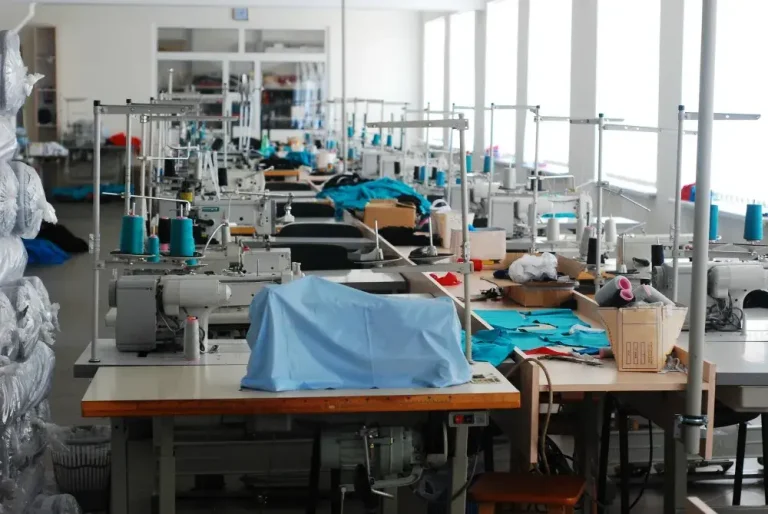
- They make it themselves. Ask what is produced in-house: cutting, stitching, sublimation, embroidery. A factory answers precisely; a middleman answers vaguely. Factories that run their own units control quality and timelines in a way traders cannot.
- They show you a physical sample before bulk. Any serious manufacturer samples first. With us, the pre-production sample takes 5–7 days and a free sample is available — judge the fabric, stitching and print with your own hands and wash it before you commit.
- MOQs are stated plainly. Minimums should be explained per style, not discovered later. If the MOQ conversation confuses you, our MOQ guide explains how minimums work and why they exist.
- Communication is direct and specific. Vague answers about timelines (“soon”, “fast”) are a warning. You want stage-by-stage answers: sampling days, production days, shipping options — the way this guide states them.
- They think in tiers. A real factory quotes quantity tiers, because its own costs fall as your order grows. Tiered pricing lets you see exactly what ordering more saves you.
Sialkot, Pakistan — where Alisterz is based — is one of the world’s established sportswear manufacturing clusters: fabric sourcing, sublimation and embroidery units, stitching and export packing sit in the same city, which is how factories here hold both quality and price at the same time. Wherever you manufacture, choose somewhere the whole supply chain exists in one place.
Step 5: Sample, wash, wear, repeat
The sample stage is where brands are really decided. Your pre-production sample is a real garment in real fabric with your real decoration. Do not just look at it on a desk:
- Wash it the way your customers will — more than once.
- Wear-test it in the actual activity. Leggings get squatted in; kits get a training session.
- Check it against your mockup: colour, logo placement, size measurements.
- Give one written list of changes — fit, colour, placement — rather than five messages across five days.
One revision round is normal. Three usually means the original brief was unclear, which is fixable and worth fixing here, because every change after bulk production starts costs real money. Approve the sample only when you would be happy for 500 customers to receive exactly that garment.
Step 6: Add your branding — private label, done in production
Private label is what turns factory garments into your brand: your woven neck labels, your hang tags, your printed polybags or boxes. These are applied during the production run, so the artwork must be final by the sample stage, not the week before shipping. If this is the core of your plan, our guide to private label activewear manufacturing covers exactly what is included and what to prepare.
Practical advice from the factory side: keep your first branding simple and consistent. One label design, one hang tag, one packaging format across the whole range. It looks like a brand; five different experiments look like a market stall.
Step 7: Bulk production and quality control
After sample approval, bulk production runs 15–20 days at Alisterz: fabric sourcing and checking, cutting to your size breakdown, printing or embroidery, stitching, inspection, counting and packing with your branding applied. Pricing is tiered — your per-piece cost drops as quantity rises — so the quote you approved already reflects the quantity you chose.
Your job during production is simple: be reachable for quick confirmations (a packing photo, a label placement check) and resist late changes. A colour change after cutting restarts the clock. The sample stage was the time for changes; production is the time for discipline.
Step 8: Shipping, duties and selling
Shipping is worldwide. First orders usually move by DHL or FedEx air — roughly 4–7 days, higher cost per piece, right for launch dates. Planned reorders at volume can move by sea — weeks, much lower freight per piece. Your landed cost is product + freight + your country’s import duties and taxes, and it is the landed cost, not the factory price, that your retail price must cover with margin. Price from the landed cost up, never from the factory quote down.
Then sell: your own store, marketplaces, team and club deals, local gyms and studios. Many of our brand customers start with one channel and one audience they can reach directly, then widen once reorders are flowing.
What does it actually cost? The honest version
Any page that gives you one fixed number for “starting a sportswear brand” is inventing it. Your total depends on your styles, quantities, fabrics and freight method. What we can do honestly is show you the components and how each behaves:
| Cost component | How it behaves |
|---|---|
| Samples | Free sample available with us; courier for the sample parcel is the only early cash most founders spend before bulk |
| Product (bulk order) | Your main cost. Tiered per-piece pricing: more pieces, lower unit price. MOQ varies by style — many of ours start from 100 pieces, some at 500 |
| Branding (labels, tags, packaging) | Small per-piece addition, applied in production; artwork setup is the main effort, not money |
| Freight | Air (DHL/FedEx) is fast and costs more per piece; sea is slow and cheap per piece at volume |
| Duties and taxes | Set by your country and product type, paid on import — budget for them from the start |
| Selling costs | Your store, ads and photography — entirely yours to control |
The real financial risk for new brands is not the factory bill; it is ordering too many styles or too much depth in slow sizes and sitting on stock. The small-range, reorder-fast model in this guide exists specifically to keep that risk low.
A realistic timeline
| Stage | Typical time |
|---|---|
| Designs, logo files and quote | Days — depends how complete your first message is |
| Digital mockup | 1–2 days after complete details |
| Pre-production sample | 5–7 days |
| Your testing and approval | Your call — budget a week including a wash test |
| Branding artwork finalised | In parallel with sampling |
| Bulk production | 15–20 days from sample approval |
| Air shipping | Roughly 4–7 days to most destinations |
| Sea shipping | Several weeks — plan reorders around it |
Total for a first launch: roughly 6–9 weeks from first message to stock in hand, if you approve things promptly. Founders who “launch in a month” either skip sampling (dangerous) or are reordering an existing, approved style (smart).
And notice what that timeline means for your second collection: sampling is already done, your patterns and label setups are on file, and your size ratios are based on what actually sold rather than what you guessed. A reorder is mostly production (15–20 days) plus shipping. This is the real reason the small-first-range model works — the first order buys you information and infrastructure, and every order after it is faster, cheaper per piece and far less stressful than the first.
Mistakes that sink first-time brands
Ordering thirty styles. Covered above, and worth repeating: depth beats breadth at the start. Skipping the sample to save a week — the most expensive shortcut in this industry. Chasing the cheapest quote without asking what fabric weight, stitching and decoration that quote assumes; cheap quotes usually remove something you cannot see until customers complain. Designing for yourself instead of your niche. And no buffer before a launch date: production is 15–20 days, but approvals, couriers and customs are real too — set your public launch date two weeks after your private delivery target.
Frequently asked questions
How much money do I need to start a sportswear brand?
There is no single honest number — it depends on how many styles, what quantities and which freight you choose. The structure matters more than the total: your product order is the main cost, samples are free with us, and freight plus duties must be budgeted from the start. Send us your styles and quantities and the quote will give you real numbers for your range, with tiers.
What is a realistic first order quantity?
For most new brands, one style at its MOQ in a sensible size ratio. Many of our styles start from 100 pieces; some start at 500. Prove the style sells, then reorder deeper. The MOQ guide explains per-style minimums in detail.
Do I need a tech pack or design experience?
No. Reference photos, a clear description and your logo files are enough to start; a tech pack speeds things up if you have one. Fit and construction decisions can be worked through at the sample stage — that is what it is for.
Can I put my own labels and packaging on the products?
Yes — that is private label, and it is a normal part of production here: woven labels, hang tags and custom packaging are applied during the run. Artwork needs to be ready by the sample stage. See our private label guide for the full picture.
How long from my first message to products I can sell?
Realistically 6–9 weeks for a first launch: quote and mockup in days, sample 5–7 days plus your testing time, production 15–20 days, then shipping (days by air, weeks by sea). Reorders of approved styles are much faster.
Can I start with team uniforms instead of retail activewear?
Yes, and many founders do — clubs and schools are reachable customers with repeat seasonal orders. The process is identical; start from our bulk team uniform guide and the soccer uniforms page if kits are your entry product.
Your move: start with a sample, not a leap
Send your designs, logo and target quantities through the Request a Quote page and we will reply with tiered pricing, an MOQ per style and a timeline you can plan a launch around. Browse the shop to see the garment bases we produce — fitness wear, yoga wear, hoodies, tracksuits, team kits and more — and start with the order you can afford to repeat. That is how brands are actually built.