Cut & Sew vs Print-on-Blank: Two Ways Custom Kits Are Made (and What Each Costs You)
Quick answer
Every “custom” garment you can buy is made one of two ways. Cut and sew means the garment is manufactured for you: fabric is cut into panels to your pattern, printed or decorated, then stitched into a finished piece in your sizes, your colours and your fit. Print-on-blank means someone buys a ready-made blank garment — a plain hoodie, tee or jersey that already exists in a warehouse — and adds your logo to it. Neither is a scam and neither is always better. They differ in fit control, design freedom, minimums, lead time and where the money goes. At Alisterz we are a cut and sew manufacturer in Sialkot, Pakistan, so this post will tell you plainly where the blank route beats us — and where it quietly costs you more than you expected.
The two routes, side by side
| Cut and sew | Print-on-blank | |
|---|---|---|
| What you start from | Raw fabric, cut to a pattern | A finished blank garment off a shelf |
| Fit and sizing | Your pattern, your grading, your size range | The blank brand’s pattern and sizes — take it or leave it |
| Colours | Your colours, matched across the whole garment | Only the colours the blank comes in |
| Design freedom | All-over prints, panel colours, contrast stitching, custom features | Whatever fits on the printable area of a finished garment |
| Decoration | Sublimation before sewing, embroidery, screen print | Screen print, DTG or embroidery on the finished garment |
| Private label | Your woven labels, hang tags and packaging sewn in during production | Limited — usually a printed neck label or a tag swap |
| Minimum order | Per style — at Alisterz many styles start from 100 pieces, some from 500 | Can be very low, sometimes a handful of pieces |
| Lead time | Sample 5–7 days, bulk production 15–20 days | Fast if blanks are in stock — days, not weeks |
| Cost structure | Setup up front, unit cost falls as quantity rises (tiered pricing) | Blank price plus decoration, paid on every single piece |
How cut and sew actually works
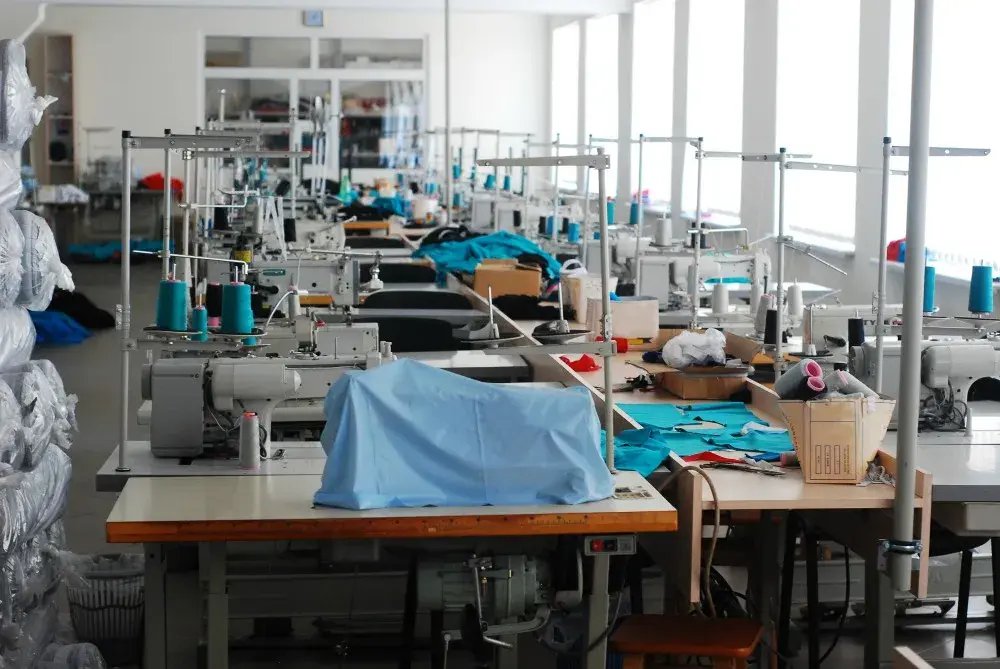
A cut and sew order starts as fabric, not clothing. The factory cuts panels to a pattern — your pattern, or one developed from your tech pack or reference garment — decorates the panels (sublimation printing happens at this stage, before sewing, which is why the design can wrap seams and cover the whole garment), then stitches, finishes and packs the order with your labels inside.
Because the garment is built to order, three things are genuinely yours: the fit (a slim European cut and a relaxed American cut are different patterns, and you choose), the size grading (how measurements step from S to 3XL is set for your market, not inherited from a blank brand), and the details (panel colours, mesh inserts, drawcord colours, zip styles — anything in the spec). This is the route behind everything in our shop, from soccer and football uniforms to hoodies.
Buyers often assume both routes produce the same hoodie with a different label. They do not. A blank was designed to be acceptable to the widest possible market at the lowest possible cost: a safe, average pattern, average fabric weight, minimal features. A cut and sew garment is designed to one spec — yours. Chest width, body length, sleeve taper, fabric GSM: every one is a decision in cut and sew, and a given in a blank. It also uses the fabric written into your quote, at the weight agreed, checked against your approved sample — our post on choosing a sportswear manufacturer covers how to verify that what was quoted is what gets made.
The price of that control is process. A pattern has to exist, a pre-production sample has to be made and approved (5–7 days at Alisterz, free sample available), and bulk production takes 15–20 days after approval. Minimums are real: many of our styles start from 100 pieces per style, some from 500, because fabric buying and machine setup are spread across the run — our MOQ guide explains the mechanics in full.
How print-on-blank actually works
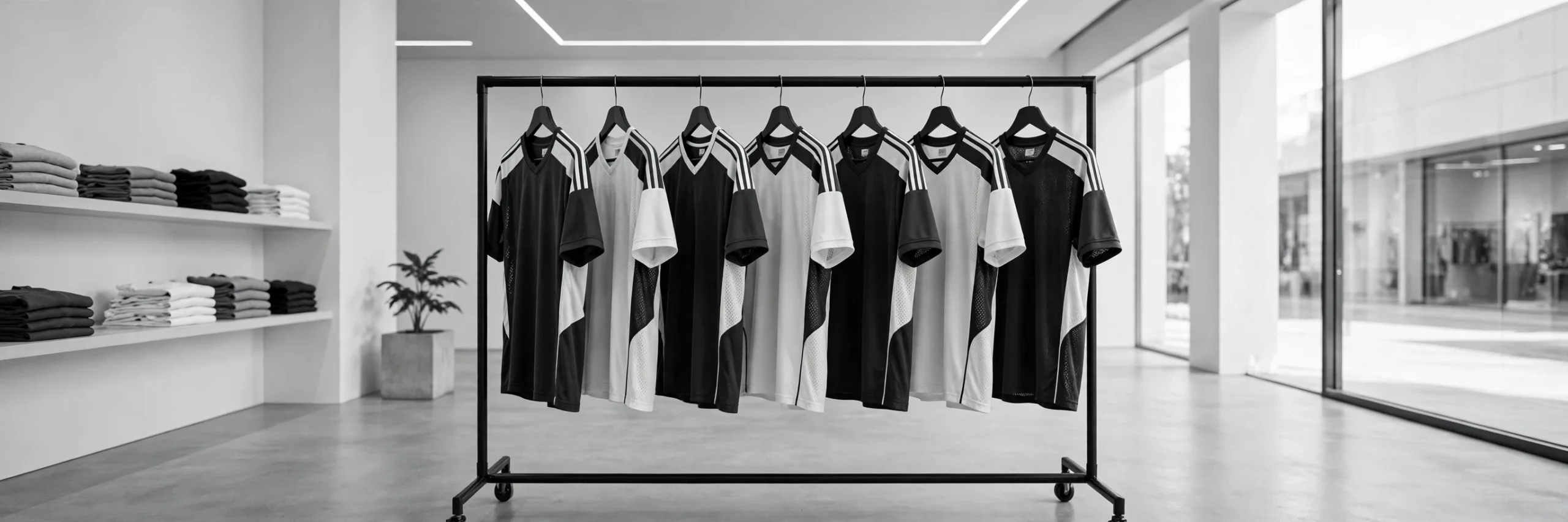
A blank is a garment a factory (somewhere) already made in bulk — plain tees, hoodies, polos, sometimes jerseys — sold undecorated by the case. A print shop or decorator buys the blanks, then applies your design by screen print, direct-to-garment print or embroidery, and ships you the “custom” result.
The strengths are real: low minimums, fast turnaround when stock exists, and no sampling stage. For a one-off event tee run of 40 pieces with a chest logo, it is often the sensible route, and we will tell a buyer that on a quote call.
The limits are structural, not a matter of effort:
- The fit is not yours. You get the blank brand’s pattern, grading and size range. If their XL runs small for your market, every XL you sell runs small.
- The colours are not yours. Your brand colour exists only if the blank catalogue stocks something close.
- The design area is small. Decoration goes on a finished garment — a chest print or a back print, not an all-over sublimated design or coloured side panels.
- Consistency depends on someone else’s stock. If the blank brand changes its garment, discontinues your colour or runs out of a size mid-season, your “same product” changes or stops with it.
What each route really costs you
Cut and sew concentrates cost at the front: pattern work, a sample stage, and a minimum order that reflects real setup. In exchange, the unit price falls as quantity rises — tiered wholesale pricing — because each additional piece is mostly fabric and stitching, not setup repeated. For orders in the hundreds and up, especially repeat orders of the same design (which skip sampling entirely), cut and sew is usually the cheaper route per piece and the better garment.
Print-on-blank spreads cost onto every unit forever. You pay the blank manufacturer’s margin on the garment, then the decorator’s margin on the print, on piece 1 and piece 1,000 alike. At 30 pieces that hardly matters. At 1,000 pieces you have paid blank prices for a garment you could have specified properly — in a fit and colour range you never chose.
One more honest line: if your design is a single-colour chest logo on a standard garment and your quantity is small and urgent, print-on-blank wins on speed and simplicity. If you are building a product to sell under your own label, or kitting a whole club in your colours with names and numbers, cut and sew is the route the product actually requires — the difference between decorating clothing and manufacturing it.
Which route fits your order?
- Choose print-on-blank if: quantities are small, the deadline is days away, the design is a simple logo, and the garment is a standard style in a stock colour.
- Choose cut and sew if: you need your colours, your fit, all-over design, names and numbers across a roster, private-label finishing, or quantities where per-unit cost actually matters.
- Choose a cut and sew manufacturer you can question: pattern, fabric spec, sample policy and what is included in the unit price should all be answerable in writing before you commit. Our OEM guide explains what to supply and what a factory should supply back.
Frequently asked questions
Is cut and sew better quality than print-on-blank? Not automatically — a well-made blank decorated well beats a badly made cut and sew garment. The difference is control: cut and sew lets you specify fabric weight, construction and fit, and verify them on a sample before bulk. Print-on-blank quality is whatever the blank brand decided, plus the decorator’s print quality.
What is the minimum order for cut and sew? Per style. At Alisterz many styles start from 100 pieces and some from 500, confirmed in your quote. Print-on-blank minimums can be far lower, which is why that route suits small, simple runs.
Can cut and sew match a garment I already sell? Yes — send a physical reference garment or a tech pack and the pattern is developed from it. Our tech pack guide shows what makes that accurate. The pre-production sample (5–7 days, free sample available) is where you confirm the match before bulk.
How long does cut and sew take compared with print-on-blank? Longer, honestly: sample 5–7 days, then 15–20 days of bulk production after approval, plus shipping. Print-on-blank can ship in days when blanks are in stock. Repeat cut and sew orders are far faster, because the pattern and files already exist.
Can I get all-over sublimation printing on blanks? No — all-over sublimation is printed on fabric panels before sewing, which is definitionally cut and sew. On a finished blank you are limited to areas the machine can reach, typically chest and back. Our decoration comparison breaks down what each method can and cannot do.
Can cut and sew garments carry my own labels and packaging? Yes — one of its main advantages for brands: woven labels, hang tags and custom packaging are applied during production, so stock arrives retail-ready. Relabelled blanks usually cannot match that finish.
Get a cut and sew quote
Send your design, quantities and size breakdown through the Request a Quote page and we will quote cut and sew properly — MOQ for your style, tiered pricing and a sample timeline in writing. If your order is genuinely better served by print-on-blank, we will say that instead of quoting you the wrong process. To see what cut and sew production produces, browse the full shop or the women’s fitness wear range.